Case study

Creating resilience through sustainability
Pellemoda
Key facts
- Revenue class: €25 – 50M
- Number of employees: 250 – 500
- Garments processed: > 50,000 pieces/year (est.)
- Sites: 2 (Headquarters with offices, sampling and warehouse, and a new production hub)
- Featured site: Empoli (Florence)
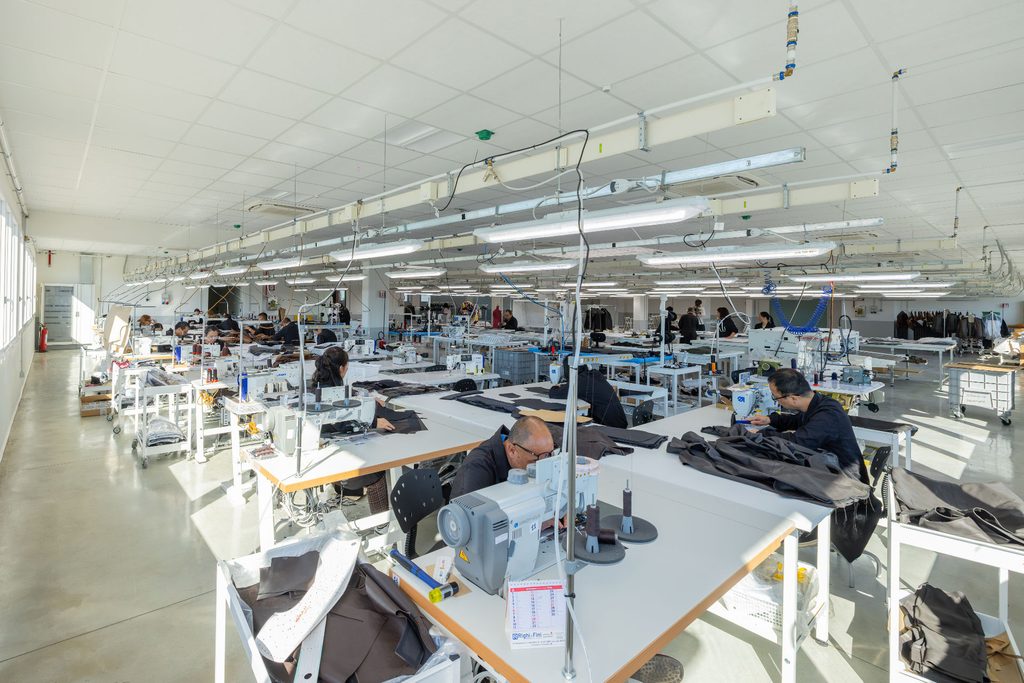
Pellemoda is a family-run Italian leather goods manufacturer, producing leather garments for international luxury and fashion houses since 1979. Based in Empoli, Florence, the business specialises in cut & sew, and finished garments.
In 2023, the company became a Società Benefit, integrating environmental, social and economic objectives into a model of responsible growth rooted in its artisanal leatherworking expertise.
Environmental Strategy
Environmental performance is assessed annually as part of the company’s Management Review. This considers regulatory requirements and the previous year’s environmental impacts to identify priorities for improvement. The outcomes inform both environmental initiatives and investment decisions, helping integrate sustainability into the company’s broader planning.
Measurement is vital and Pellemoda calculates its Scope 1 and Scope 2 greenhouse gas emissions annually, identifying key sources of emissions and tracking performance over time. The company participates in the Apparel Impact Institute’s Carbon Toolkit, monitoring emissions and production data against a defined baseline year. This company-level perspective is complemented by work to assess the carbon footprint of individual garments, providing greater visibility into environmental impacts at product level.
Luxury has always been about excellence, but today excellence is not enough if the system behind it is fragile. The future of luxury will depend, not only on what we create, but on the resilience of the value chain that makes creation possible.
Azzurra Morelli, Pellemoda CEO
Key data
€20,000
annual cost savings thanks to photovoltaic system and electrification1
At least
40 t CO2eq
annual emissions savings thanks to photovoltaic system and electrification2
Decarbonization Approach and Impact
Energy efficiency
Pellamoda’s new production site is equipped entirely with LED lighting, while automatic shutdown systems further reduce energy use: timers switch off lights outside production hours and motion sensors control lighting in intermittently used areas such as storage rooms and stairways. These measures are expected to cut lighting-related energy consumption roughly by half compared to conventional systems.3
Renewable electricity
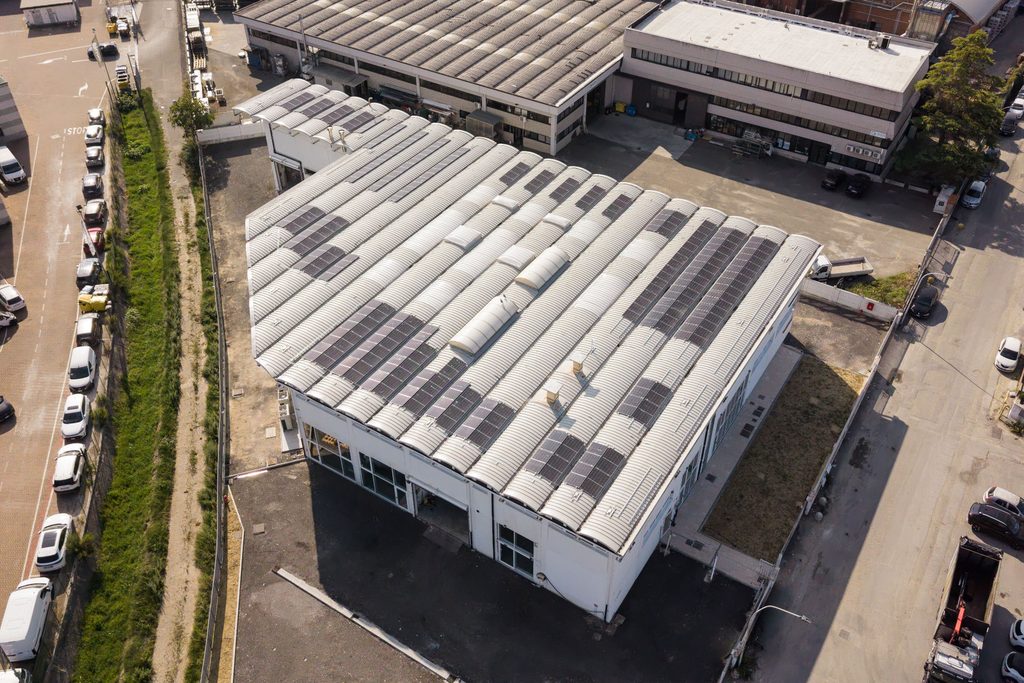
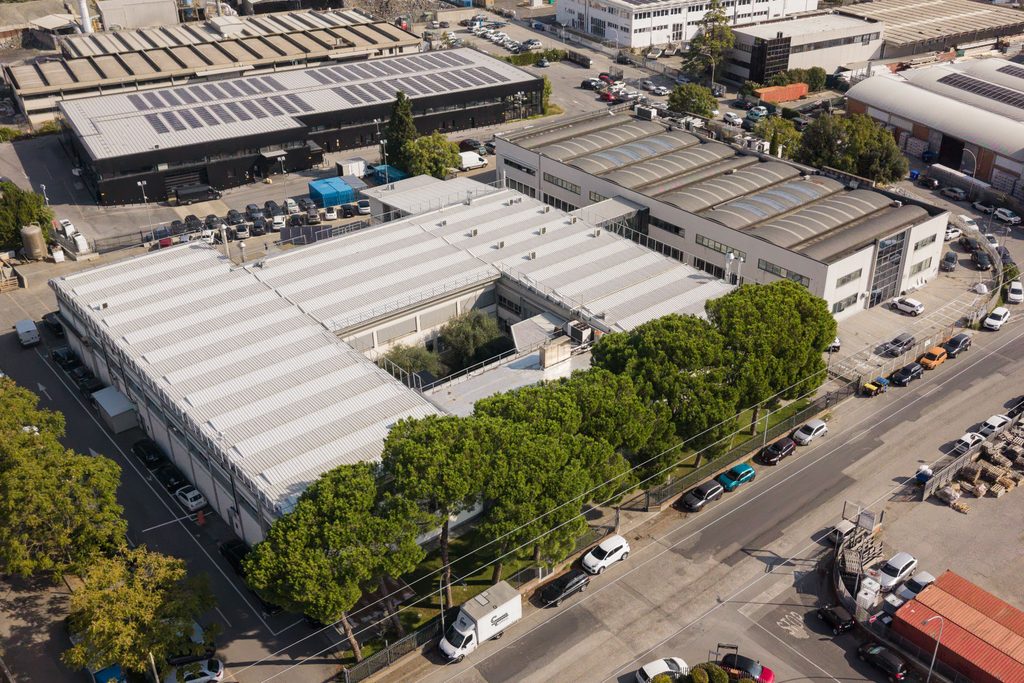
The new site’s roof carries an 80 kWp photovoltaic system, which is expected to cover 20 to 30% of demand once all planned activities are fully operational. Based on typical solar yields for the area, the system is estimated to generate around 100,000 kWh per year, worth an estimated €20,000 of savings and 30t of avoided CO2eq per year, with a payback time of around 4 years4.
Electrification
The site runs entirely without fossil fuels for heating. Heat pumps provide all space heating and cooling, while heat pump water heaters and electric water heaters meet domestic hot water needs. This approach is estimated to reduce annual running costs by more than one-third5 and avoid around 10 tCO2eq6 per year compared to an equivalent gas-based solution.
1. Quantis calculation for efficiency measures based on average Italian grid electricity prices (source: Eurostat)
2. Quantis calculation based on photovoltaic capacity (source: JRC), average Italian grid electricity prices (source: Eurostat), Italian grid emission factors market-based (source: AIB 2025) and natural gas emission factor (source: DEFRA)
3. The Fashion Pact estimate.
4. Quantis calculation based on photovoltaic capacity (source: JRC), average Italian grid electricity prices (source: Eurostat), Italian grid emission factors market-based (source: AIB 2025)
5. Pellemoda’s own calculation.
6. Quantis calculation based on Italian grid emission factors market-based (source: AIB 2025) and natural gas emission factor (DEFRA)
Looking ahead
Photovoltaic installation
Solar panels installation at the company’s headquarter
Rainwater collection
A rainwater collection system will be installed at the Orvieto site.
-
Case study
Jaco Pellami
Case study Combining automation, efficiency, and renewables Key facts Jaco Pellami is… Read more
-
Case study
Clerici Tessuto
Case study Honouring history through a sustainable future Key facts Clerici Tessuto… Read more
-

Case study
The Decarbonisation Accelerator Framework
Practical roadmap to decarbonisation Suppliers across the fashion and luxury value chain… Read more
The information contained in these case studies has been provided by the relevant suppliers and is included in the Decarbonisation Accelerator Framework for illustrative and informational purposes only. The Fashion Pact has not verified the information provided, and makes no representation or warranty as to its accuracy, completeness or reliability. The case studies should not be regarded as an endorsement or recommendation by The Fashion Pact of the suppliers concerned or of their products or services.