Case study
Combining automation, efficiency, and renewables
Jaco Pellami
Key facts
- Revenue class: €5 – 25M
- Number of employees: < 50
- 1 Site: San Giovanni Lupatoto (Verona)
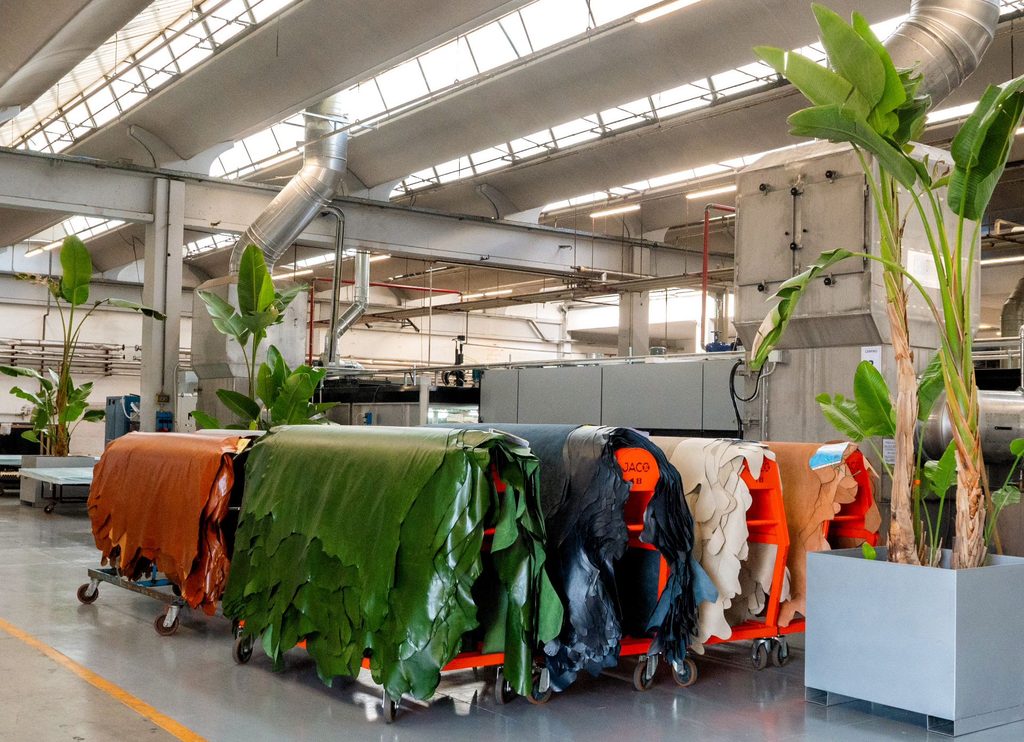
Jaco Pellami is a family-run SME specialising in leather production since 1989. Based in San Giovanni Lupatoto, Verona, it processes more than 100,000 wet-blue hides a year into finished leather used for footwear, furniture and small goods.
Environmental Strategy
Environmental responsibility is a defined priority of company strategy, with a commitment to use alternative energy sources, reduce energy and water consumption, adopt lower-impact chemical products and improve waste management. Its commitment is independently verified through UNIC Social Accountability certification (ICEC), confirming compliance with the UNIC Code of Conduct for the leather industry. Jaco Pellami has achieved Gold-level certification from Leather Working Group (LWG).
Investment decisions are made jointly by its leadership and operational team, drawing on hands-on production experience and a deep understanding of machinery and raw material. Up to 5% of revenues are dedicated to energy, water and chemical efficiency initiatives, supporting continuous improvement.
Alongside energy and chemical management, water is a key element of Jaco Pellami’s environmental strategy, given its centrality to leather processing. The site relies on an in-house wastewater treatment plant, equipped with remote monitoring software for real-time tracking and control.
Reducing our environmental impact is the starting point for innovation across all our production processes. What we have achieved so far shows that sustainability means efficiency: a tangible commitment where environmental protection and business resilience reinforce each other, providing stability and creating value across the entire value chain.
Carlo Gariggio, Co-General Manager, Jaco Pellami
Key data
At least
€60,000
annual cost savings thanks to photovoltaic and energy efficiency1
At least
100 t CO2eq
annual emissions savings thanks to photovoltaic and energy efficiency2
Decarbonization & Financial Upside
Energy efficiency
The site has been fully converted to LED lighting, while sensor-based equipment on the spray line adjusts energy use according to production needs.
Work is now underway to reduce electricity consumption during colour-change downtime, including technical upgrades to the line, such as including the installation of more efficient motors. This has reduced its maximum power requirement during colour change from 80 kW to 12 kW, generating estimated savings of approximately 25,000 kWh per year, with expected savings of a 5% of annual grid electricity purchases.
Energy efficiency also extends to heat management. A floating system installed on the wastewater treatment plant’s open tanks is expected to reduce heat loss by 15 to 20%, particularly during wintertime. This reduces the thermal energy needed to maintain the required water temperature.3
Renewable electricity
Jaco Pellami’s most relevant investment in renewable electricity is a 283 kWp photovoltaic system, which generates on-site an average of around 40% of the site’s electricity demand. Despite the substantial upfront cost, the system is expected to pay for itself within 5 years, demonstrating its strong long-term value. The investment was partly supported by regional funding (Veneto Sviluppo), combining a non-repayable grant with subsidized financing.
To maximise the benefits of solar generation, work shifts have been reorganised to align production more closely with peak generation and increase self-consumption. More recently, surplus solar energy has also been used to power electric heat exchangers that heat water in the wastewater treatment plant.4
Chemicals management
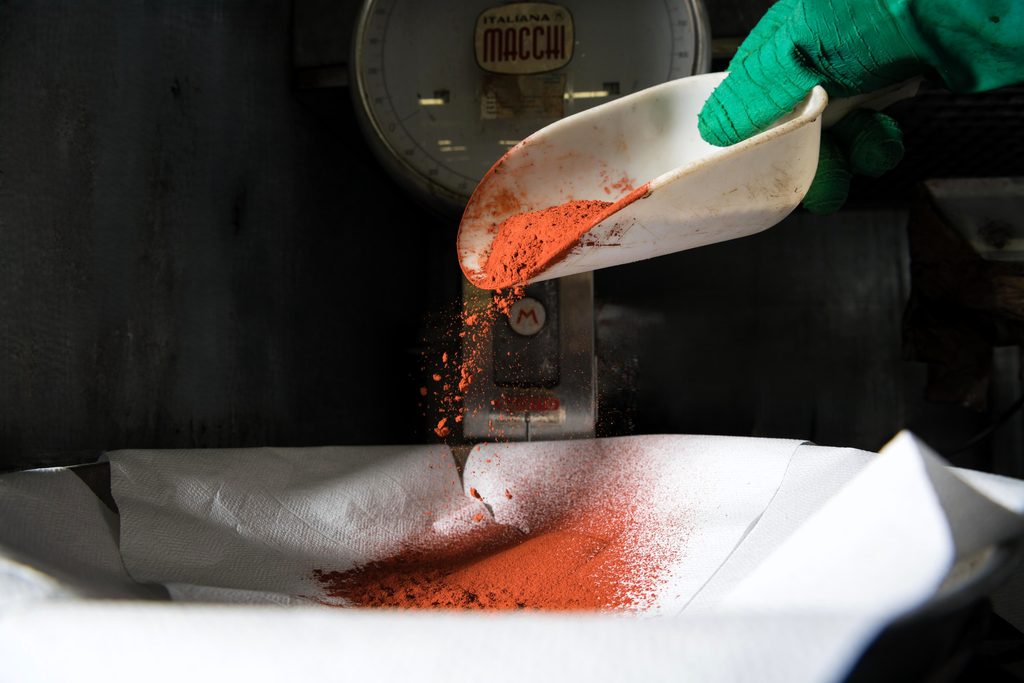
Jaco Pellami is also working to reduce the environmental impact of chemicals used in leather processing. Chemical dosing in the retanning process is now 80% automated through digital recipes, improving precision and cutting waste. The company has also revised its dyeing recipes to reduce ammonia use and lower sulfate and chloride content in dyeing baths.
The automation of the dyeing drums has enabled longer and more controlled reactions, resulting in better dye absorption and higher-quality finished leather.
These initiatives have contributed to a reduction of more than 8% in the use of dyeing chemicals, resulting in a corresponding decrease in environmental impact, lower input costs and improved compliance with increasingly stringent chemical regulations in the industry5.
1. Quantis calculation for efficiency measures based on average Italian grid electricity prices (source: Eurostat)
2. Quantis calculation based on Italian grid emission factors, market-based (source: AIB 2025)
3. All information in the section is coming from Jaco Pellami’s own calculations
4. All information in the section is coming from Jaco Pellami’s own calculations
5. All information in the section is coming from Jaco Pellami’s own calculations
Looking ahead
Jaco Pellami is considering an expansion of photovoltaic capacity, using vertical panels on walls facing a nearby highway. This could add up to 130kWp of additional capacity.
-
Case study
Clerici Tessuto
Case study Honouring history through a sustainable future Key facts Clerici Tessuto… Read more
-

Case study
The Decarbonisation Accelerator Framework
Practical roadmap to decarbonisation Suppliers across the fashion and luxury value chain… Read more
The information contained in these case studies has been provided by the relevant suppliers and is included in the Decarbonisation Accelerator Framework for illustrative and informational purposes only. The Fashion Pact has not verified the information provided, and makes no representation or warranty as to its accuracy, completeness or reliability. The case studies should not be regarded as an endorsement or recommendation by The Fashion Pact of the suppliers concerned or of their products or services.